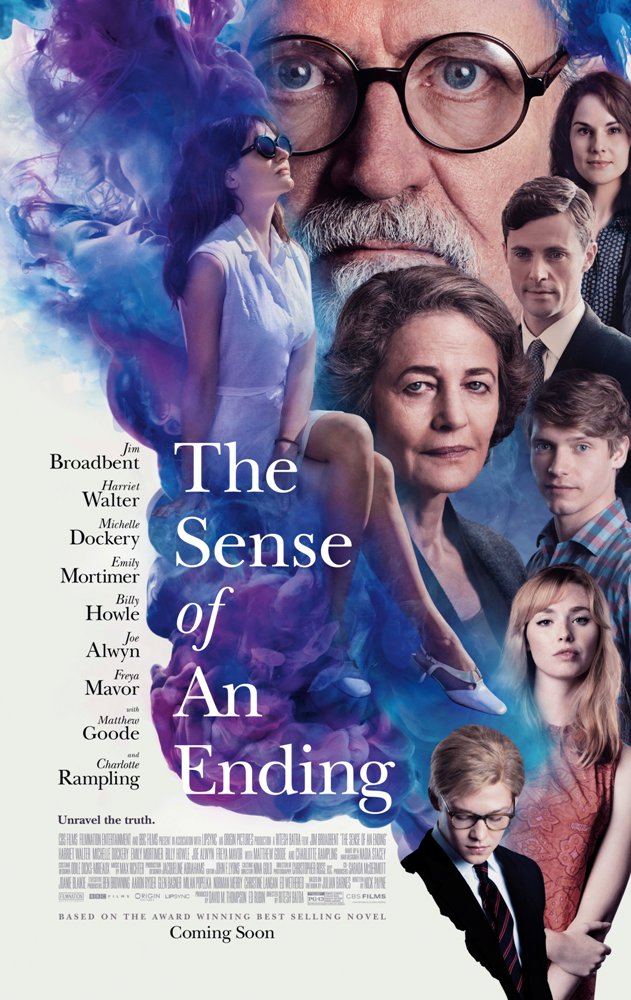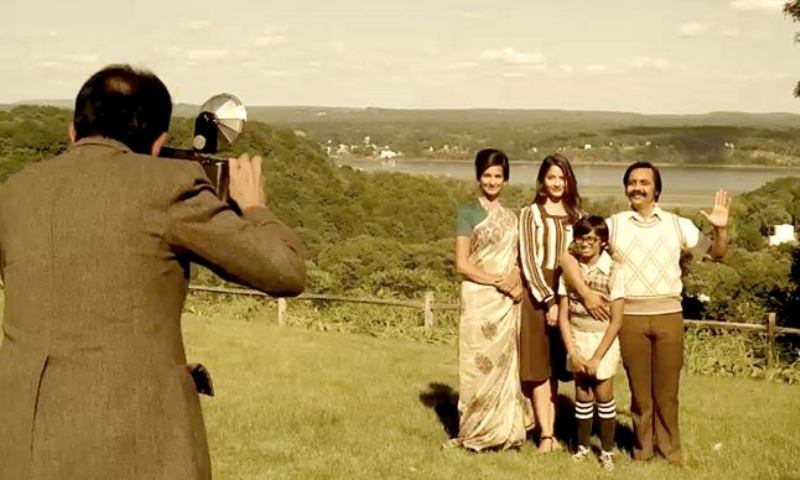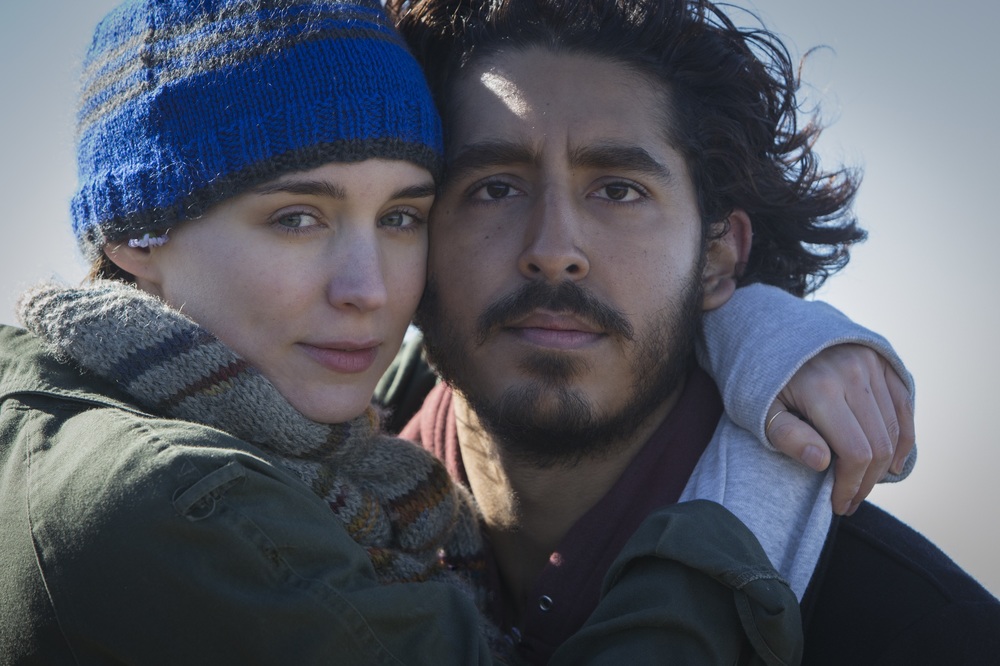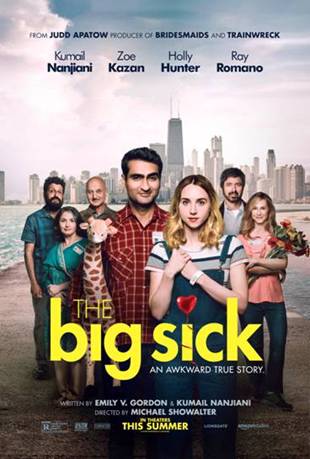
Here’s a quick look at last night’s red carpet at the 13th New York Indian Film Festival:
Some films are already sold out, so if you’re thinking of going to this year’s festival, it’s time to get moving…
India & Ireland, film & more
Here’s a quick look at last night’s red carpet at the 13th New York Indian Film Festival:
Some films are already sold out, so if you’re thinking of going to this year’s festival, it’s time to get moving…
Today’s the day when the Indo-American Arts Council‘s 13th New York Indian Film Festival opens.
The yearly event, which has grown from strength to strength, looks to have a really interesting and diverse line-up of Indian and Indian-American stories.
Here’s a trailer for the festival.
Some films that I’ve already got my eye on are Fireflies, Aakashathinte Niram (Color of Sky) and Baavra Mann, and I’m looking forward to many other delights and surprises.
The festival launches tonight with Dekh Tamasha Dekh and closes on Saturday, May 4th with Filmistaan.
Deepa Mehta took time recently to discuss her latest film Midnight’s Children:
Can you tell us how you first discovered the award-winning novel Midnight’s Children?
DM: I distinctly remember talking about the wonder of it all with a friend in 1982 while we walked around Lodhi Gardens. It had an enormous impact on me. It uncannily echoed my own upbringing and, for a novice filmmaker in the early ‘80s, the book seemed to read like a movie — full of cinematic language and rooted in popular Indian cinema. The novel’s fearless, dark humor, combined with its affection for all human foibles, stayed with me.
How did you acquire the rights to the book?
One night, over dinner, I asked Salman Rushdie who had the rights to ‘Midnight’s Children.’ He said he did. I asked to buy them and he sold the option to me for one dollar. It was not premeditated; it was just gut instinct.
Did you feel you were ready to make a film of such an enormous scope?
There is a saying – luck favors the prepared. The choices I have embraced in life, and the movies I made previously, have certainly given me the technical and emotional confidence to tackle an epic about my homeland, though in many ways, I felt that I was learning the filmmaking craft all over again. I knew I wanted to do it, but it required a huge amount of chutzpah to then wrap my head around actually filming it. I think that my producing partner David Hamilton’s dedication and leadership really did make it possible. Some of the most meaningful decisions in life are based on that indiscernible feeling of just knowing it’s time. And it was.
How did you find collaborating with such an accomplished author on this film project?
I think the most vital factor of all was the pure delight and fun of working with Salman, and how profoundly in synch we were about the heart of the story. Salman and I have both made our homes in the Indian Diaspora; I in Canada, he in Britain and America, and we have similar complicated intertwined roots in India. Those shared perspectives and memories, plus his creative generosity and wit, kept me, and the movie, going. Salman once said about Indian born artists who have emigrated, ‘our identity is at once plural and partial. Sometimes we feel that we straddle two cultures; at other times, that we fall between two stools. But however ambiguous and shifting the ground may be, it is not an infertile territory for a writer to occupy.
What kind of a story are you telling in Midnight’s Children since you are tackling both people and a country?
It is a coming-of-age story, full of the trials and tribulations of growing up, and of the terrible weight of expectations. What separates it from other thematically similar films is that this coming-of-age story is not only about a boy but also about his country, both born at the very same time at a pivotal point in Indian history. Saleem’s journey as our vulnerable, misguided hero is always intertwined with the struggles of the newly independent India, as it finds its own voice in the world.
How did you go about keeping the film authentic to the various time periods?
The most important preparation (except perhaps for the gym!), was meticulously planning the world of the movie. In `Midnight’s Children’ we meet four generations over five very distinct time periods; there are three wars, 64 locations, and 127 speaking parts, plus animals, babies, snakes, cockroaches (Well, that didn’t really work out. Our cockroach wrangler failed). And, everything in the world of the film had to be shipped or found or designed or built in Sri Lanka. My closest ally and second brain/eyes is always my brother Dilip, who is responsible for the entire ‘look’ of this film. He fought for authenticity in every aspect of the movie: visuals, historical period, class, accents, religious backgrounds…no detail too large (wars, helicopters, parades) or too small (ants, lizards) to escape his scrutiny. There is no one else whom I fully trust who knows the historical landscape and the ‘real’ India, and who could create all of this flawlessly and with such a passion for accuracy and for beauty.
How did you prepare with this large cast?
Preparation with the cast is a given. A month before shooting there was an intensive workshop in Mumbai with the actors and me, led by my friend Neelam Choudhry, a theatre director from Chandigarh. This was not a rehearsal of the script; it was work based on the Natya Shastra, a treatise written in India in the 4th century AD about the art of drama, which includes a rasabox or grid of nine essential mental states and emotions: love, repulsion, bravery, cowardice, humor, eroticism, wonderment, compassion, and peace. This intensive work knitted us together as a group and grounded us in the emotional arcs of the film. Since I don’t use shot lists or storyboards, the actor motivates my camera. From the actors I know what the emotional center of the scene will be and then we shoot it. By now, director of photography Giles Nuttgens and I have a finely honed shorthand.
Midnight’s Children opened April 26 in NYC, and will open in other US cities in May.
Director Mira Nair (Salaam Bombay, Mississippi Masala, Monsoon Wedding, The Namesake) will be doing Q&A sessions after several screenings of her latest film, The Reluctant Fundamentalist, in New York City this weekend. Here’s the schedule:
If you can make it, you should go! She’s a wonderfully eloquent and passionate speaker, and every discussion reveals some new insight or detail about the making of the film.
And if you do go, see if you can find out when exactly the film’s soundtrack will be releasing and where. That’s the one question I can’t get a clear answer to anywhere, aside from hearing “Yes, yes, it’s coming!”
Last time I was back in dear Madras, I visited a huge sari and fabric emporium (“shop” just doesn’t begin to describe it) in search of material to have some clothes made for a wedding. In all my visits to India, this was my first time examining any saris with much attention.
As the salesman rolled out some kancheevarams, I quickly realized just how many elements were layered together into one garment. If the main color might be described as peacock blue that was only the most general of starting points. Upon closer examination, I realized I was in fact looking at two cousins in the extended blue and green families married to the point where I couldn’t determine where either one began or ended. In addition, there was an added color in the weave that gave a particular sheen to the silk. Depending on how you held the fabric and caught the light, it looked at times more bluish, at others, more green. But there was more. The border of that same peacock blue sari had a very different background color running through it, a deep maroon which served as the foundation for the piece de resistance: a wide wave of golden threadwork woven into a repeating line of mangos nestled between twin tracks of yet more design motifs.
She may not sit at a loom with spools of silk, but the latest film Mira Nair has labored on for six years, her rendition of Mohsin Hamid’s successful novel The Reluctant Fundamentalist, opening today, is also a rich union of multiple overlapping strands, albeit one that threatened to unravel several times due to potential backers aversion to funding a movie with a bearded Pakistani Muslim man as the protagonist.
But, fortunately for us, the director persisted, and created an expanded version of Changez Khan’s story, that of a Lahori son of a poet, whose once affluent parents (the well suited Shabana Azmi and Om Puri) are not as concerned as he is that the family wealth has diminished, as their position in society remains. Changez (played by British rapper and actor Riz Ahmed) is admitted to Princeton where he excels and impresses Jim Cross (Kiefer Sutherland), the senior manager at a boutique Wall Street firm, who senses and avails himself of his new employee’s drive. Changez’s American dream is complete when he falls for the (wealthy) bohemian artist, Erica (played by a chestnut-haired Kate Hudson).
Just as he’s on the cusp of a big promotion while in Manila on a business trip, September 11 happens and by the time Changez steps off the plane in the US and finds himself singled out for a cavity search, it all starts to go to pieces.
As those around him – both the co-workers he knows and complete strangers on the street – start to eye him with suspicion, especially when he starts to grow a beard. In turn, Changez starts to seriously question who he is and in what and whom he can believe. While assessing a failing publishing house in Istanbul (yes,yes, where East meets West) his angst grows to a breaking point.
In bringing Hamid’s novel to the screen, Nair decided to add a third act, with Changez back in Lahore a decade later. In the present day Pakistan that she presents us, after ten years of The War on Terror and a messy, tortured relationship with the US, tensions are hair-trigger when an American professor is kidnapped. Changez, now a popular professor himself, sits in the restaurant of a student hostel and is interviewed by an American reporter and possible spy, Bobby Lincoln (Liev Schreiber). As the conversation continues and Bobby presses Changez to reveal if he knows the professor’s whereabouts, student unrest grows around them due to rough police tactics in their hunt for the kidnappers. Just as you start to wonder if Bobby is a spook, it also looks possible that Changez might be in cahoots with the local militants suspected of the kidnapping. Nair keeps the ground shifting throughout, for both her characters and her audience, until the very end.
Riz Ahmed furthers expands the Leading Man section of his CV with this role. He goes from carefree undergrad to troubled man with seemingly minimal effort, using his demeanor and his deep, intelligent eyes to relay so much. Sutherland is perfect as the ramrod-straight, tightly wound boss who initially is also a stand-in father figure for Changez. Kate Hudson is pretty as Erica, but seemed hollow when portraying the emotional depth and confusion of her character.
More than just the leads in The Reluctant Fundamentalist, it’s the perfectly chosen string of supporting actors who add the golden embellishments. First, the compelling Haluk Bilginer is excellent as the worldly and resigned book publisher whose conversations with Changez serve as a wake-up call. This man is divine to watch, even just smoking. He’s so good you’d love to see more of him. And then there’s Chandrachur Singh, a wonderful surprise after so many years away from film, as Bandy Uncle, whom we only see briefly and on the periphery of several scenes, but who manages to hold our eyes and attention when he’s there. And finally Nelsan Ellis as Wainwright, friend and co-worker to Changez, unrecognizable to me as the same man who plays Lafayette on True Blood.
All the various layers and elements unite to illustrate how first impressions – often colored by our suspicions about ‘the other’ – can frequently be misleading and there is a real value in looking more closely before coming to any conclusions. This is even telegraphed in the opening credits, where strings of numbers on the screen – which you would assume are code of some sort – morph into rows of tiny passport type photos. Things are not what they seem. Those black and white numbers on a screen or a page represent actual lives (a foreshadowing not just of the massive security and surveillance complex that has mushroomed after 2001, but also for the work that Changez’s firm does, making cold, hard decisions to cut jobs – that is, people – in service to X or Y company’s shareholders).
That tone is perfectly established with the opening scene, cutting between that American professor exiting a cinema discussing the film “Bol” with a female companion, and jump over to the Khan home, where Changez’s parents are hosting a musical evening. The singers sit at the center of the scene, but Changez is restless and circulates on the periphery, receiving pictures on his mobile phone and taking a call. As the music rises to a crescendo, and the camera focuses on the (blood red) paan-stained mouth of one singer, the scene then cuts back to the professor being grabbed and struggling as he is wrestled into a car which speeds off. Is Changez connected to that abduction?
Final thoughts
This is such an important film, but not in the way that suggests “Eat your broccoli, it’s good for you” – rather, it deals with both sides of a reality that we are and have been living with for years, and it makes a case for understanding rather than jumping to conclusions. As you might expect, this is a darker, sadder film than Monsoon Wedding or The Namesake, but it still comes with the trademark sensuality and beauty of those films and is visually and aurally delicious, with many meaningful treats nestled in the images and the dialogue and the music.
If, like Changez, you too have grown tired of the simplistic reduction of everything to assumptions and hazy misperceptions, you won’t want to miss The Reluctant Fundamentalist.
The Reluctant Fundamentalist opens April 26 in New York (at the IFC Center and Lincoln Plaza) and Los Angeles (at The Landmark), on May 3 it opens in many other US cities.

In the lead-up to the US release of Mira Nair’s latest film, The Reluctant Fundamentalist, on April 26th, the director and several cast members have been in New York to promote the film.
First up, an interview with Kiefer Sutherland, who plays Jim Cross, the boss and quasi-surrogate father to Riz Ahmed’s Changez.
You could hear that very distinct voice of his in the hallway as he approached the room, and then right after, Mira greeting him with great affection.
What is unique about working with Mira as a director?
She’s the Mum you’ve always wanted.
Someone asked me ‘What’s it like working with a feminist director?’ and actually, her point-of-view is asexual. She’s got a point-of-view, period. It’s not feminine or masculine. But her nature on the set is very motherly. She creates a safe environment for you to try things. It doesn’t mean that she won’t crack the whip to get the day done, but there’s a real nurturing quality to her that I don’t normally run into, and I love her to death.
Can you give an example of that ‘cracking the whip’?
We had had a 15-hour day in New Delhi, she had a samosa in one hand and it was a great line: “Enough is enough!” This was her crew there, they knew her and, fuck me, did they not move! Everything just went ba-ba-ba-boom, done!
Your character seems to see a lot of parallels between Changez and himself, even though he doesn’t come out and express it – what do you think struck a chord?
He saw an opportunity. My character’s an opportunist. In many ways he represents America in the film. He’ll nurture you and take care of you as long as you feed him. And when you don’t feed him, he’ll cut you loose, you’re dead. And that’s exactly what he does in the movie. He saw an opportunity.
The manipulation is: “We have all these things in common,” the reality is: “You’re gonna help me take you for everything you’ve got.”
Do you think the moment where you’re wailing on him (Changez) in the lobby by the elevator, is he upset because the opportunity is gone…
No, it’s a mirror. If you’re chasing the American dream full throttle like Jim is and then your protégé says ‘I don’t need it’ – there’s a dynamic power shift. He can’t handle that.
What was the shooting of the film like for you? Any adventures? Was it all shot indoors?
Well, I got to go to New Delhi, but there were some other quite exotic locations that I did not get to go to. It’s odd, even in New Delhi, for instance that scene, by the elevator, we could have shot that in New York or Atlanta. I wish we had done it on the street somehow, it’s a hard place to shoot.
In the press notes it said how 9/11 really impacted you as a father…
There’s not a day goes by that I don’t think about it. I don’t have a computer, so I can’t speak about the Internet, but I have friends that have gone on it, half drunk late at night and they see things they wish they hadn’t.
It was 5:45 in the morning in Los Angeles and I was on my way to work on 24 and I got a call saying I don’t know if we’re going to work today and I flipped on the TV and the first tower had been hit, the second tower had not, and literally five minutes later, the second tower was hit. And like everybody else, mesmerized, I just sat there watching, waiting to find out if I had to go to work, and I watched these two people, and you know how you make stuff up in your head, I had decided that – for whatever reason – these two people didn’t know each other, they shared an office for a year and a half, and here, all of a sudden, they’re standing at a window, and they made a choice to hold each other’s hands and jump. And I think about that. My life would have been very different had I not seen that.
I called my ex-wife and said ‘Are you watching this?’, she said ‘Yeah’, she was crying, and we had probably the nicest conversation of our entire marriage. It brought my entire family closer together. Nothing was to be taken for granted after that, and I think everybody felt like that. When you hear the stories, about New York and how it changed the city, and it’s had a very profound, lasting effect. I think about it all the time.
How did that impact you in the movie?
It’s not so much in the movie as when I read the script. So, my focus has always been clearly on those two people first, then imaging the fear and suffering of the people in the towers, and the people on the planes, and all their families, and so forth. I didn’t spend much time thinking about the ripple effect of people of a different faith (i.e. Muslim) or a different color, how their lives were massively impacted, and I was kind of embarrassed that I hadn’t really thought about it. I consider myself relatively progressive, and it just….. I think I was so angry after 9/11, like many people, that the better part of me didn’t surface right away. When I read the script I was profoundly impacted by that.
Copyright © 2013 Filmiholic · Website by Resultz Digital · Powered by Optimal Hosting · Log in